
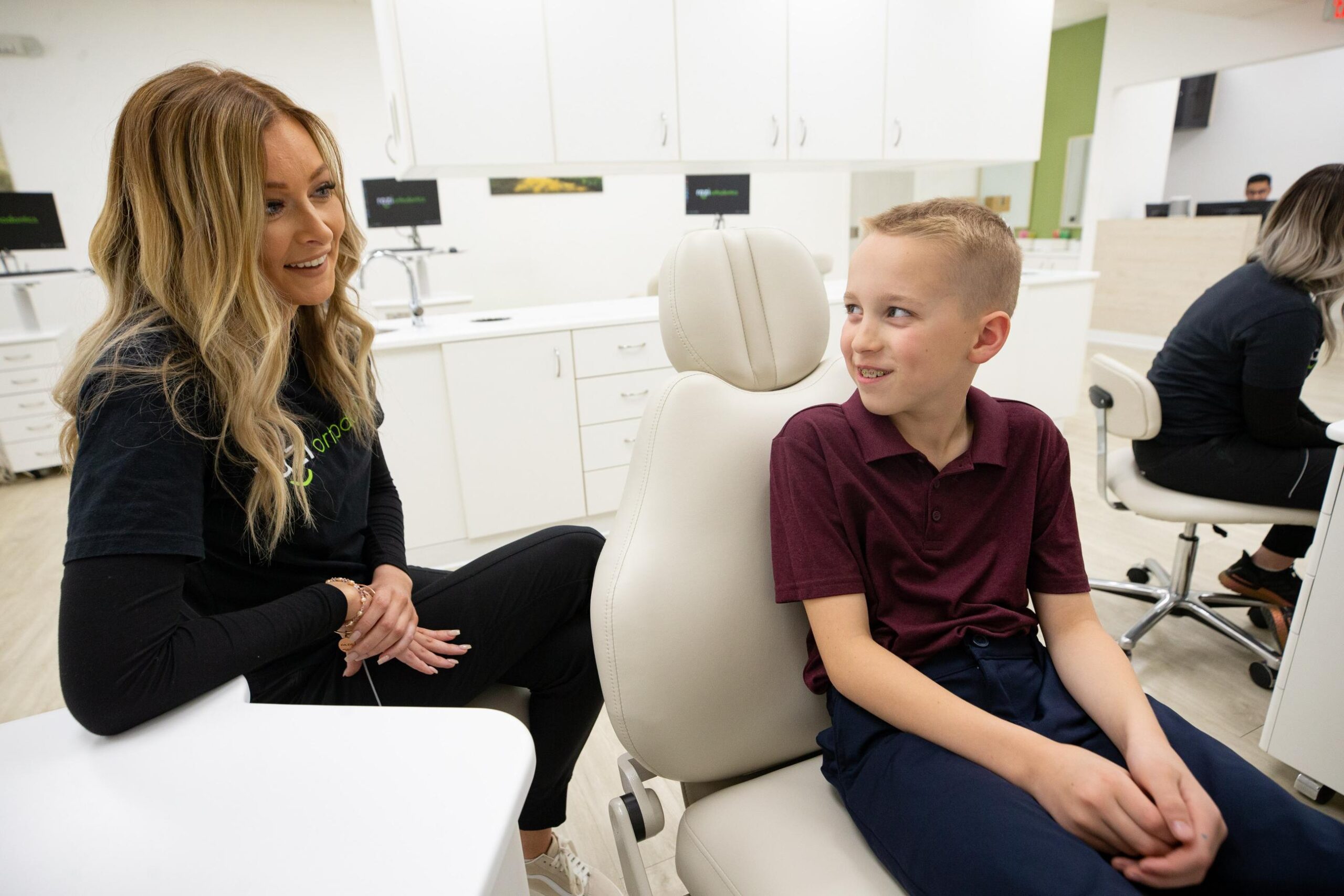
Airway orthodontics is an approach to orthodontic treatment that evaluates how your teeth, jaw, and airway work together, focusing on breathing and sleep quality alongside smile alignment. Rather than treating tooth position alone, this method considers how the structure of your mouth affects your ability to breathe well every day.
Your orthodontist can do more than align your teeth. The right treatment can also help you breathe better, sleep more soundly, and feel more energized throughout the day. Orthodontist Dr. Razi at Razi Orthodontics takes this whole-health perspective seriously, evaluating airway concerns alongside tooth alignment to support better outcomes for families.
Airway orthodontics addresses conditions like chronic mouth breathing, snoring, and sleep-disordered breathing. These issues often trace back to narrow dental arches or underdeveloped jaws that restrict the airway. Modern metal braces focus on moving teeth into alignment for a beautiful smile. Airway orthodontics looks at the bigger picture, recognizing that proper jaw development supports both a great smile and healthy breathing.
The American Association of Orthodontists recommends early evaluation so orthodontists can identify developmental concerns that affect more than just tooth position. Clinical interest in airway-first approaches has grown in recent years, and research published in the American Journal of Orthodontics and Dentofacial Orthopedics has shown that rapid palatal expansion can increase nasal airway volume, reinforcing the connection between jaw structure, breathing patterns, and overall wellness.
How Does Airway-Focused Orthodontic Treatment Work?
Airway orthodontic treatment starts with a detailed evaluation of your breathing, jaw structure, and tooth alignment. Rather than relying on standard dental X-rays alone, your orthodontist uses specialized imaging to assess how air moves through your nasal passages and throat, then builds a treatment plan that addresses both airway function and smile alignment.
Here’s what you can expect:
- Full evaluation and airway assessment. Orthodontist Dr. Razi begins with a thorough examination that includes evaluating your airway, not just your teeth. This step involves specialized imaging to visualize how air flows through your nasal passages and throat. Think of it as getting the full picture before making any decisions.
- Diagnosis of underlying issues. The evaluation identifies jaw development concerns, tongue posture issues, and any restrictions affecting your airway. Understanding these root causes helps create a treatment plan that addresses more than surface-level crowding.
- Custom treatment planning. Based on your specific needs, Dr. Razi designs a plan built around your individual goals. This might include palatal expanders to widen a narrow arch, functional appliances to guide jaw growth, or Invisalign to refine tooth position.
- Ongoing monitoring. Throughout treatment, your friendly orthodontist tracks both tooth movement and breathing improvements. Adjustments keep you progressing toward better alignment and better airway function at the same time.
- Collaborative care when needed. Some families benefit from working with ENTs, sleep specialists, or other healthcare providers. Airway orthodontics often involves a team approach to address complex breathing concerns, and Dr. Razi coordinates that collaboration when it makes sense.
This process ensures treatment targets the whole picture rather than just straightening teeth.
What Are the Key Benefits of Airway Orthodontics Over Traditional Approaches?
Airway-focused treatment offers advantages that go well beyond your smile. Here’s why more families are asking about this approach.
How Does Airway Orthodontics Improve Breathing?
Airway orthodontics helps many families transition from chronic mouth breathing to healthier nasal breathing, which filters and humidifies air more effectively. When the dental arch is expanded to its proper width, the nasal passages above gain more room. This single change can make a noticeable difference in how a child or adult breathes during the day and at night.
Can Airway Orthodontics Help With Sleep Quality?
By opening the airway, treatment reduces snoring and improves symptoms of mild to moderate sleep-disordered breathing in many cases. When you sleep better, you tend to have more energy and focus during the day, whether that’s at school or at work. Families at Razi Orthodontics frequently report that sleep improvements are among the first changes they notice.
How Does Airway Orthodontics Support Jaw Development in Children?
Especially in kids, guiding proper jaw growth creates space for incoming permanent teeth and supports balanced facial development. Early orthodontic intervention during the growth years gives Dr. Razi more options to shape the jaw naturally, rather than correcting concerns after growth has already stopped.
Rather than simply moving crowded teeth into a smaller space, airway orthodontics expands the arch to create room naturally. This tackles why teeth are crowded in the first place. And when you breathe better, you often feel better. Families in our practice have shared that they notice improved concentration and less fatigue after treatment, which makes sense given the strong link between quality sleep and daytime performance.
These benefits make airway orthodontics especially appealing for families looking at the bigger picture of their child’s health and development.
Airway Orthodontics vs. Traditional Braces: A Side-by-Side Comparison
Airway orthodontics differs from modern metal braces by prioritizing breathing and jaw development alongside tooth alignment. The table below summarizes six key differences between airway orthodontics and modern metal braces. Understanding these differences helps you make an informed decision about your care:
| Factor | Airway Orthodontics | Modern Metal Braces |
|---|---|---|
| Primary Goal | Improve airway function while aligning teeth | Straighten teeth and correct bite |
| Diagnostic Approach | Airway imaging, breathing assessment, jaw evaluation | Standard dental X-rays and impressions |
| Common Appliances | Palatal expanders, functional devices, aligners | Brackets, wires, rubber bands |
| Treatment Focus | Jaw development, airway space, tooth position | Tooth movement and bite correction |
| Outcomes | Improved breathing, sleep, and smile | Straighter teeth and better bite |
| Age Considerations | Often starts earlier to guide growth | Can begin at any age |
Here’s an important point: both approaches can use braces or aligners as tools. The difference lies in the overall treatment philosophy and goals. Modern metal braces excel at creating beautiful smiles. Airway orthodontics aims for beautiful smiles that also support healthy breathing.
A board-certified orthodontist trained in airway assessment can help determine which approach fits your needs. Dr. Razi evaluates every family for airway concerns during initial visits at Razi Orthodontics.
What Factors Affect the Cost of Airway Orthodontics?
Several factors shape the cost of airway orthodontics, including case complexity, the types of appliances used, the number of treatment phases, and your insurance coverage. Because airway-focused treatment often involves specialized imaging and appliances beyond standard braces, costs can vary more than with traditional orthodontic care. Here’s a closer look.
How complex is your case? Families with significant airway restrictions or jaw development concerns require more extensive treatment than those with minor issues. A more involved case means more appointments and a longer treatment timeline, both of which affect the overall investment.
Types of appliances needed
Expanders, functional devices, and aligners each carry different costs. Your treatment plan might include one or several of these tools depending on what Dr. Razi identifies during your free consult.
Treatment duration plays a role too. Some families complete treatment in a single phase. Others, especially children, need early intervention followed by a second phase once permanent teeth arrive. ### Two-phase treatment
Two-phase treatment involves separate fees for each stage, so it’s worth discussing the full timeline upfront.
Many dental insurance plans cover the orthodontic components of airway treatment. Coverage varies by plan, so checking your specific benefits is worthwhile. The team at Razi Orthodontics helps families understand their benefits and maximize their coverage. Flexible payment plans also make affordable care accessible, and a free consult gives you a clear picture of what your treatment would involve and cost.
Who Is a Good Candidate for Airway Orthodontics?
Good candidates for airway orthodontics include children with mouth breathing or snoring, families dealing with narrow palates, and adults experiencing sleep-disordered breathing or chronic fatigue linked to underdeveloped jaws.
- Children with mouth breathing, snoring, or restless sleep. These habits often signal airway concerns that early intervention can address.
- Narrow palates or crowded teeth in kids. When the upper jaw hasn’t developed fully, teeth crowd together and the airway is compromised.
- Adults with sleep-disordered breathing or chronic fatigue. Grown-ups benefit from treatment that opens the airway and improves sleep quality too.
- Crowding linked to underdeveloped jaws. If crowding stems from a small jaw rather than large teeth, expansion-based treatment works better than extraction-based approaches.
- Anyone whose orthodontist flags airway concerns during evaluation. Sometimes these issues aren’t obvious until a trained professional at Razi Orthodontics takes a closer look.
The AAO recommends that children have an orthodontic evaluation by age seven. At this age, Dr. Razi can identify airway and development concerns early, when treatment is often simpler and more effective.
Frequently Asked Questions About Airway Orthodontics
Can airway orthodontics help with sleep apnea?
Airway orthodontic treatment can improve mild to moderate sleep apnea by expanding the dental arch and creating more airway space. Severe sleep apnea requires evaluation by a sleep specialist. Dr. Razi coordinates with other healthcare providers to make sure you receive appropriate care for your specific condition.
Is airway orthodontics only for children?
Not at all. While children often see the most dramatic results because their jaws are still developing, adults benefit from airway-focused treatment too. Adult treatment involves different techniques in some cases, but meaningful improvements in breathing and sleep quality are possible at any age. Research in the European Respiratory Journal has documented airway improvements in adult families who underwent expansion-based orthodontic treatment.
How long does airway orthodontic treatment take?
Airway orthodontic treatment takes somewhere between 12 and 24 months for most families, depending on the complexity of the case. Some children receiving early intervention have a shorter initial phase followed by a second phase later. Dr. Razi provides a timeline specific to your situation during your free consult.
Can you use Invisalign with airway orthodontics?
Yes. Invisalign works well for refining tooth position after expansion or as the primary method for appropriate cases. The specific tools used depend on your individual needs and goals, and Dr. Razi will walk you through the options that make the most sense for you.
Does insurance cover airway orthodontics?
Many dental insurance plans cover the orthodontic components of airway treatment, just as they would modern metal braces or Invisalign. Coverage for diagnostic imaging or specialized appliances varies by plan. The team at Razi Orthodontics helps you understand your benefits and maximize your coverage so you can focus on getting the care you need.
What’s the difference between airway orthodontics and regular braces for my child?
Regular braces focus on moving teeth into straighter positions and correcting bite alignment. Airway orthodontics does that too, but it also evaluates whether your child’s jaw is developing in a way that supports healthy breathing. If Dr. Razi identifies airway concerns during a free consult, he can recommend a treatment approach that addresses both the smile and the airway at the same time. For many families, this broader approach means fewer concerns down the road.