
An overbite is one of the most common bite concerns affecting adults, and it’s also one of the most frequent questions we hear at Razi Orthodontics. The short answer? Yes, Invisalign can fix many overbites effectively. Dr. Kaleem Razi, DMD, MSD, your friendly orthodontist, uses clear aligner technology to help adults achieve straighter smiles and healthier bites without modern metal braces. In this guide, you’ll learn how overbite correction works, what to expect from treatment, and whether Invisalign might be right for your smile. We’ll cover the different types of overbites, how clear aligners shift teeth into healthier positions, what factors influence cost, and who makes a great candidate. By the end, you’ll have a clear picture of your options and the confidence to take the next step.
What Is an Overbite?
An overbite is when your upper front teeth overlap your lower front teeth vertically. Normal overlap is generally 1-3mm and is healthy. A deep overbite typically exceeds 4mm and can lead to tooth wear, jaw soreness, and chewing difficulties. Knowing which type you have helps determine the right treatment path.
How Is a Normal Overbite Different From a Deep Overbite?
- Normal overbite: Upper teeth overlap lower teeth by roughly 1-3mm. This is typical and doesn’t require treatment.
- Deep overbite: Upper teeth overlap by 4mm or more. This can lead to wear, discomfort, and uneven jaw stress.
Orthodontists also distinguish between two types of overbites:
What causes an overbite? Genetics play the biggest role. If your parents had overbites, you’re more likely to develop one. Childhood habits like thumb-sucking or prolonged pacifier use can also contribute. Sometimes the jaw simply develops unevenly during growth.
Adults with overbites often notice:
- Upper teeth that look too prominent when smiling
- Lower teeth that bite into the roof of the mouth
- Jaw soreness or clicking
- Uneven tooth wear
- Difficulty chewing certain foods
How Invisalign Corrects an Overbite
Invisalign corrects overbites using a series of custom clear aligners that gradually shift teeth into healthier positions. Each aligner applies gentle pressure based on a precise digital plan. For overbite cases, attachments and elastics often work alongside the aligners to guide vertical and bite movements over the course of treatment.
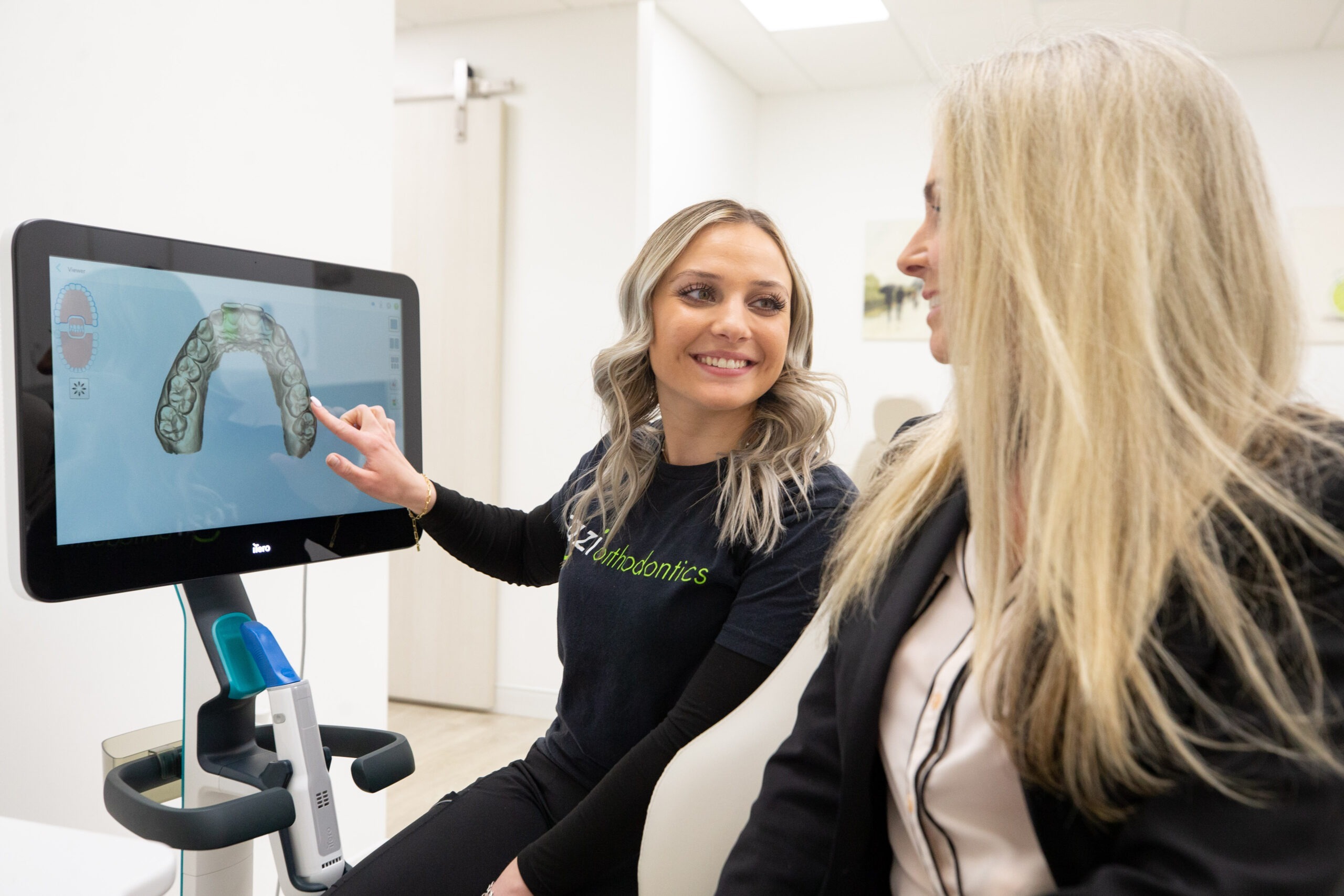
Dr. Razi uses 3D scanning and treatment planning software to map out every stage of your smile journey before you even start wearing aligners.
How Does the Process Work Step by Step?
Digital scanning: An iTero element digital scanner creates a detailed 3D model of your teeth. No messy impressions needed.
Treatment planning: Dr. Razi designs your custom plan using specialized software. You can preview your expected results before starting.
Aligner fabrication: Your aligners are made from SmartTrack material, which applies consistent force while staying comfortable.
Attachments placement: Small tooth-colored bumps (attachments) may be bonded to certain teeth. These give the aligners grip for more complex movements, including the vertical shifts needed for overbite correction.
Elastics integration: For moderate to deeper overbites, you may wear small rubber bands that connect your upper and lower aligners. These precision wings help pull your bite into proper alignment.
Progressive changes: You’ll wear each set of aligners for one to two weeks, then move to the next set. Each aligner makes small adjustments that add up to significant changes.
Daily commitment matters. You’ll need to wear your aligners 20-22 hours every day. Remove them only for eating, drinking anything besides water, and brushing your teeth.
Benefits of Using Invisalign for Overbite Correction
Clear aligners offer real advantages for adults who want to fix their overbite without the look and feel of modern metal braces.
Why Do Adults Choose Invisalign?
Nearly invisible: Most people won’t notice you’re wearing aligners. Think about it — work presentations, client meetings, first dates. The aligners stay quietly in the background.
Removable design: Take them out for meals, important events, or photos. No food restrictions. No brackets catching on your lips.
Smooth plastic aligners don’t irritate your cheeks and gums the way wires and brackets can, so comfort tends to be noticeably better.
Fewer appointments: You’ll typically visit our office every six to eight weeks instead of every three to four weeks with braces.
Easier cleaning: Brush and floss normally. No threading floss under wires or using special tools to clean around brackets.
Predictable outcomes: Digital treatment planning shows you the expected result before you start. You know what you’re working toward.
Clear aligner technology has advanced significantly in recent years, making it suitable for a wider range of bite concerns than ever before.
What Makes Invisalign Different From Braces for Overbite Correction?
Both Invisalign and braces can correct overbites well. The right choice depends on your specific situation.
When Invisalign works well: mild to moderate overbites where the teeth need repositioning respond very well to clear aligners. If your jaw alignment is normal but your teeth overlap too much, Invisalign can likely help.
When braces might be better: severe skeletal overbites, where the jaw bones themselves are misaligned, sometimes need the mechanical advantage that braces provide. In rare cases, jaw surgery combined with orthodontics may be recommended.
The compliance factor matters too. Invisalign only works if you wear it. Braces are bonded to your teeth, so they’re always working. If you’re not confident you’ll wear aligners consistently, that’s an honest conversation to have during your free consult.
Dr. Razi evaluates each patient individually to recommend the most effective approach for your specific overbite.
What Affects the Cost of Invisalign Overbite Treatment?
Several factors influence what you’ll pay for Invisalign overbite correction. Understanding them upfront helps you budget with confidence.
Key cost factors include:
Overbite severity: More complex cases require longer treatment and more aligners, which affects cost.
Treatment length: A mild overbite might take around 12 months. A moderate case could take 18-24 months. More time means more aligners.
Refinements: Some patients need a few extra aligners after the initial set to fine-tune results. This is often included in full treatment plans.
Auxiliary appliances: Attachments, elastics, or other tools may be part of your treatment.
Insurance coverage: Many dental insurance plans include orthodontic benefits that apply to Invisalign. Our team helps verify your coverage.
Financing options: Flexible payment plans make treatment accessible. You don’t have to pay everything upfront.
Adult Invisalign treatment cost varies based on case complexity . The best way to know your specific cost is to schedule a free consult where we can evaluate your needs directly.
Are You a Good Candidate for Invisalign Overbite Treatment?
You’re likely a good candidate for Invisalign overbite treatment if you have a mild to moderate dental overbite, healthy teeth and gums, and the commitment to wear your aligners consistently. Dr. Razi, an orthodontist with advanced Invisalign training, uses digital scanning to evaluate your bite and determine whether clear aligners can achieve the results you want. Most adults with overbites qualify for Invisalign treatment.
Ideal candidates have:
- Mild to moderate overbite (not severe skeletal concerns)
- Generally healthy teeth without extensive decay or gum disease
- Realistic expectations about treatment time and results
- Commitment to wearing aligners 20-22 hours daily
- Willingness to attend regular progress appointments
Factors that may affect candidacy:
- Severe skeletal jaw discrepancies may need braces or combined treatment
- Missing teeth or significant dental history may require modifications
- Certain medical conditions affecting bone health
What Happens During the Consultation?
During your free consult with the Razi Orthodontics family, Dr. Razi will:
- Examine your bite and teeth
- Take digital scans using the iTero element digital scanner
- Discuss your smile goals
- Explain whether Invisalign can address your overbite
- Outline expected treatment time and cost
- Answer all your questions
There’s no pressure. The goal is to give you the information you need to make a confident decision about your smile.
Frequently Asked Questions
How Long Does Invisalign Take to Fix an Overbite?
Treatment length varies based on overbite severity. Mild cases may take around 12 months, while moderate to deeper overbites typically run 18-24 months. Wearing your aligners 20-22 hours per day keeps treatment on schedule and helps you reach your goal sooner.
Does Invisalign Hurt When Correcting an Overbite?
Most adults feel mild pressure or tenderness for a day or two when switching to a new aligner, which is a sign the aligners are working. Smooth plastic is gentler on the cheeks and gums than brackets and wires, so overall comfort tends to be quite manageable.
Can Invisalign Fix a Severe Overbite Without Surgery?
Many overbites can be corrected with Invisalign alone, especially dental overbites where jaw alignment is normal. Severe skeletal overbites involving jaw misalignment may need braces, elastics, or in rare cases, jaw surgery combined with orthodontics. A free consult is the clearest way to know your options.
Will My Overbite Come Back After Invisalign?
Teeth naturally want to shift over time, which is why retainers are essential after treatment. Wearing your retainer as directed protects your new bite long term. With consistent retainer use, your overbite correction can last for life.
Is Invisalign Worth It for Adult Overbite Correction?
For most adults, yes. Invisalign delivers a discreet, comfortable, and predictable way to correct an overbite while fitting into a busy lifestyle. Beyond appearance, fixing an overbite reduces tooth wear, jaw strain, and chewing concerns, making it a worthwhile investment in long-term oral health.
Ready to Smile Big?
Fixing your overbite as an adult is very doable, and Invisalign makes it more comfortable and convenient than ever. Whether your bite bothers you because of how it looks, feels, or functions, Dr. Razi and his team are here to help you find your perfect fit.
We welcome families for free consults. We’ll evaluate your overbite, discuss your options, and walk you through what treatment looks like from start to finish.
Ready to get started? Schedule your free consult and get ready to smile big.