
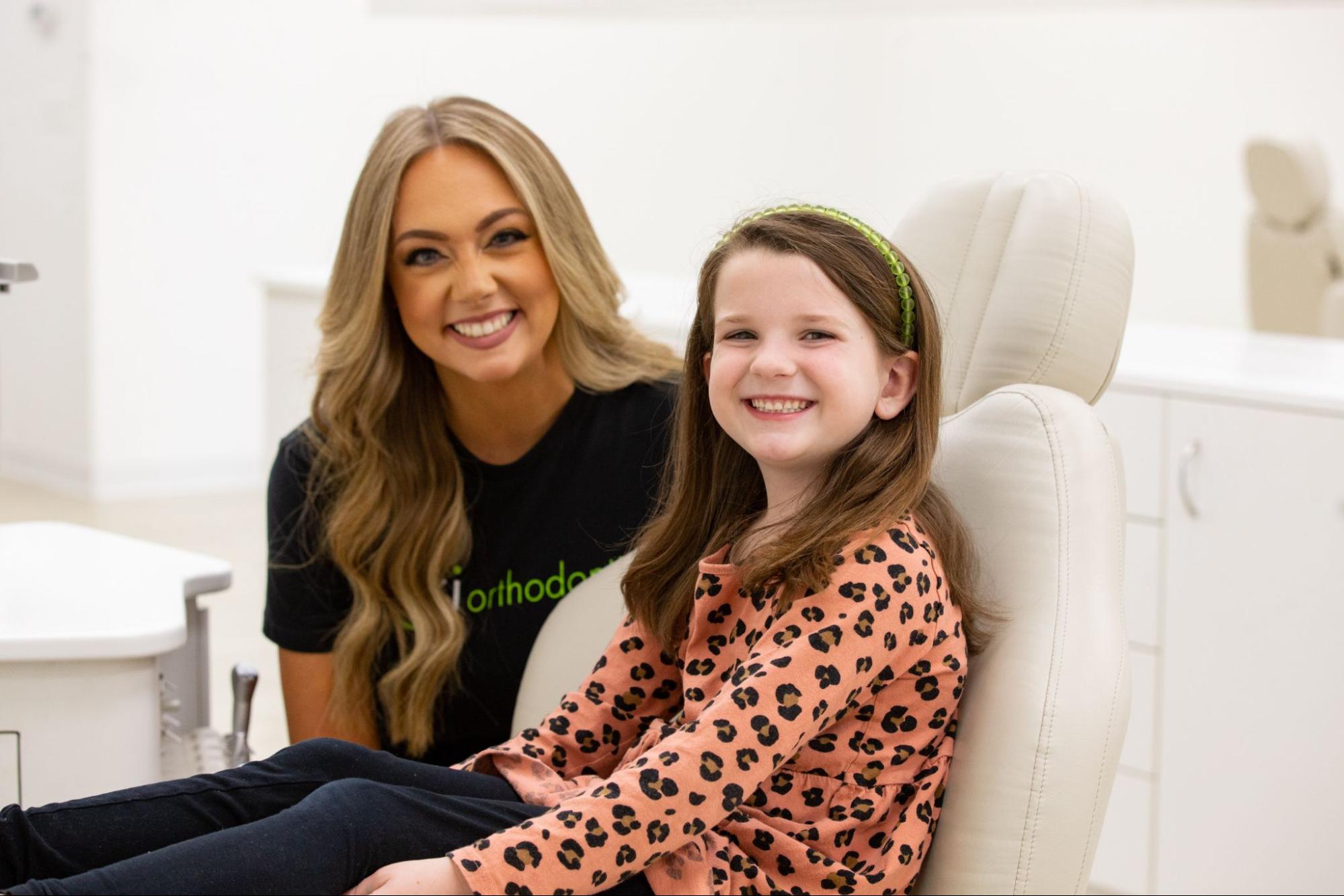
When it comes to Phase 1 vs Phase 2 orthodontics, timing makes all the difference. Two-phase orthodontic care combines early interceptive work with later full orthodontics to address bite and alignment concerns at the right developmental stages. Phase 1 happens while your child still has baby teeth, typically between ages 6 and 10. Phase 2 begins after most permanent teeth come in, usually around age 11 or older. This approach helps prevent more serious issues and can reduce the complexity of future care for families.
What Is Two-Phase Orthodontic Treatment?
Two-phase care is a planned, two-stage approach that uses your child’s growth to its full advantage. At Razi Orthodontics, board-certified orthodontist Dr. Razi, DMD, MSD, evaluates children as young as seven to determine whether two-phase care could benefit their developing smile. Not every child needs early work. But for those who do, starting at the right time makes a real difference in their results.
How Phase 1 and Phase 2 Work Together
Phase 1 orthodontics uses appliances like palatal expanders between ages 6 and 10 to guide jaw growth and create space for incoming permanent teeth. Phase 2 follows later with full braces or invisalign to align all permanent teeth into a healthy, balanced bite. Together, the two phases build a strong foundation and a polished final result for your child’s smile.
What Is Phase 1 Interceptive Treatment?
This first stage focuses on guiding jaw growth and creating space for permanent teeth. Dr. Razi typically recommends Phase 1 for children between ages 6 and 10 who show specific developmental concerns.
Common Phase 1 appliances include:
- Palatal expanders to widen a narrow upper jaw
- Partial braces on select teeth to correct specific alignment issues
- Space maintainers to hold room for permanent teeth
- Habit appliances to address thumb sucking or tongue thrusting
Most children complete this stage in 6 to 12 months. The goal is to address skeletal issues while your child is still growing, when bones are more responsive to gentle correction.
What Happens During the Resting Period?
After Phase 1 ends, your child enters a resting period. During this time, remaining baby teeth fall out naturally and permanent teeth continue erupting. Dr. Razi monitors your child’s progress with periodic check-ups, usually every 4 to 6 months. This observation period is provided at no additional cost to families.
What Is Phase 2 Full Treatment?
Phase 2 begins once most or all permanent teeth have come in. This stage uses full braces or Invisalign to align the complete bite. Most kids finish Phase 2 in 12 to 24 months, depending on individual needs.
The focus shifts from jaw development to precise tooth positioning. Because the earlier stage addressed the foundation, this second stage often goes more smoothly.
Benefits of Two-Phase Orthodontic Treatment
There’s a lot to love about a planned, two-stage approach. For the right child, it can mean a shorter second stage, fewer complications, and a confidence boost during the awkward in-between years.
How Does Phase 1 Support Healthy Growth?
The early stage works with your child’s natural development to set things up beautifully for later.
- Corrects skeletal concerns while your child is still growing
- Guides jaw development for better facial symmetry
- Creates room for permanent teeth to erupt properly
- Addresses harmful habits like thumb sucking early
- Protects protruding front teeth from injury
What Long-Term Benefits Can Families Expect?
The payoff extends well beyond childhood. Families often find the second stage easier and faster because of the groundwork already laid.
- Reduces the likelihood of tooth extraction later
- May eliminate the need for jaw surgery in severe cases
- Can shorten Phase 2 time in the chair
- Improves the final smile by building a better foundation
- Boosts your child’s confidence during formative years
According to the American Association of Orthodontists, every child should have an orthodontic evaluation by age 7 . Early evaluation lets your friendly orthodontist spot concerns that are easier to fix while a child is still growing.
Phase 1 vs. Phase 2: Key Differences
The core difference is simple: the first stage guides growth, and the second stage aligns teeth. Here’s a clear comparison of what each stage involves:
The key distinction is timing and purpose. Early work takes advantage of your child’s natural growth to correct issues that become much harder to fix once growth stops. The later stage fine-tunes the smile once all the permanent teeth are in place.
Cost Factors for Phase 1 vs. Phase 2 Treatment
Two-phase orthodontic care is billed in two separate fees, with the first stage typically costing less than the second because it’s shorter and uses simpler appliances. This setup lets families plan their investment over time rather than paying everything up front. At Razi Orthodontics, we walk you through every number so there are no surprises.
How costs break down:
The first stage typically costs less because it runs shorter and uses simpler appliances. The second stage involves longer time in braces or Invisalign.
Insurance considerations:
Many dental insurance plans cover orthodontic care once per lifetime. The timing of when you use this benefit matters. Some families apply a portion during the first stage and the remainder during the second. Dr. Razi’s team can help you understand your specific coverage.
Why two-phase care can save money:
Addressing concerns early often prevents the need for more complex, expensive work later. Children who skip the first stage when it’s recommended may eventually need extractions, longer time in braces, or even jaw surgery.
Payment options:
Razi Orthodontics offers flexible payment plans to make affordable care accessible. HSA and FSA accounts can also help offset out-of-pocket costs. Your free consult includes a complete breakdown of expected costs for your child’s specific situation.
Who Needs Two-Phase Orthodontic Treatment?
Not every child needs the two-stage approach. Board-certified orthodontist Dr. Razi recommends it when specific developmental concerns are present that benefit from early action. In short, families whose children show skeletal issues, severe crowding, or harmful oral habits during the mixed-dentition years are the best candidates for an early evaluation and possible Phase 1 care.
Children who benefit most include those with:
- Severe crossbites where upper and lower jaws don’t align properly
- Underbites or overbites affecting jaw development
- Significant crowding preventing permanent teeth from erupting
- Protruding front teeth at risk of injury during play or sports
- Narrow upper jaw requiring palatal expansion
- Harmful oral habits like thumb sucking or tongue thrusting affecting jaw growth
The American Association of Orthodontists recommends that every child have an orthodontic evaluation by age 7. By this age, enough permanent teeth have emerged for Dr. Razi to spot developing concerns, even if active care isn’t needed right away.
During your child’s evaluation, Dr. Razi will determine whether early action is beneficial or if monitoring and waiting for the second stage alone makes more sense. Many children do just fine with a single stage of care starting in their preteen or teen years. To learn more about what fits your child, you can find your perfect fit by exploring our treatment options.
Frequently Asked Questions
When should my child first see an orthodontist?
The American Association of Orthodontists and Dr. Razi recommend an orthodontic evaluation by age 7. At this age, your child has enough permanent teeth for Dr. Razi to identify developing concerns. Early evaluation doesn’t always mean early action. It gives us the chance to monitor growth and recommend care at the ideal time.
Are Phase 1 and Phase 2 done back-to-back?
No. A resting period separates the two stages. This break allows remaining baby teeth to fall out and permanent teeth to erupt naturally. Dr. Razi monitors your child during this time with periodic check-ups at no additional cost. The resting period typically lasts 1 to 3 years, depending on your child’s development.
Will my child still need braces after Phase 1?
Most children who complete the first stage will still need the second stage. Phase 1 addresses jaw growth and creates space, but it doesn’t fully align all permanent teeth. The second stage completes the alignment once all permanent teeth are in place. The good news is that Phase 2 is often shorter and simpler because of the groundwork already laid.
Can we skip Phase 1 and just wait?
Sometimes, yes. If your child’s concerns are mild or mostly involve tooth positioning rather than jaw development, waiting for a single stage of care may be appropriate. However, certain issues like severe crossbites or narrow jaws are much easier to correct during the growth years. Skipping Phase 1 when it’s recommended may result in longer time in braces, extractions, or more invasive correction later.
Does insurance cover both phases?
Most orthodontic insurance covers care once per lifetime, regardless of how many stages are involved. Your lifetime maximum can be applied across both stages. Dr. Razi’s team will review your specific insurance benefits during your free consult and help you get the most out of your coverage.
How long is the break between phases?
The resting period typically lasts 1 to 3 years. The exact timing depends on when your child’s remaining baby teeth fall out and permanent teeth come in. During this time, Dr. Razi monitors your child’s development with observation appointments every 4 to 6 months.